
What Will Counseling During Divorce Help You Accomplish?
When it comes to counseling and divorce, counseling during divorce helps clients process difficult emotions, build practical coping tools, and move toward a stable, whole version of life after separation. Among the most meaningful divorce therapy benefits are reduced anxiety, clearer communication, and a renewed sense of direction, each one grounded in real mental health support during separation rather than facing it alone. Divorce brings up a swell of emotions, ranging from anger and resentment to fear and grief, and without support those feelings often stall progress rather than resolve. A trauma-informed, culturally competent approach gives clients a steady place to work through that pain instead of carrying it alone. Divorce touches identity, finances, parenting, and routine all at once, which is why structured support matters.
Counseling offers a specialized form of therapy built specifically for this transition, distinct from general talk therapy. It is designed to meet individuals and couples where they are, whether the goal is emotional processing, communication skills, or rebuilding a sense of direction. Zoelife Psychiatric Services® integrates personalized, evidence-based care with both in-person and virtual access, so clients in Illinois or Florida can get consistent support on their own schedule.
What does divorce counseling actually address?
Divorce counseling typically focuses on a few recurring needs:
- Processing anger, grief, and fear in a safe, structured space
- Learning communication strategies for co-parenting or ongoing contact with a former spouse
- Rebuilding daily routines, confidence, and a sense of identity outside the marriage
- Developing coping skills for anxiety or uncertainty about the future
Is counseling only for people who are struggling severely?
No. Counseling supports anyone navigating the practical and emotional weight of divorce, not only those in crisis. Many clients simply want clarity, structure, and a responsive professional who treats the whole person, not just a diagnosis.

How Do You Prepare To Start Divorce Counseling?
Preparation for divorce counseling begins with naming the specific struggles a separation has caused, whether that means grief, co-parenting friction, or fear about what comes next. The American Psychological Association describes this kind of support as counseling offered to individuals. Their family members to help them cope with problems caused by divorce. Turning that definition into a plan makes the first appointment far less overwhelming.
A short checklist helps clarify what to bring to a first conversation:
- Write down current symptoms, such as trouble sleeping, persistent sadness, or anxious thoughts.
- Decide which starting point fits best: a psychiatric evaluation, medication management, psychotherapy, TMS, or a telepsychiatry session.
- Note whether in-person visits or virtual appointments work better for the current schedule.
- Identify any family members, including children or teens, who may need their own support.
Zoelife Psychiatric Services offers psychiatric evaluations, medication management, psychotherapy, TMS, and telepsychiatry across Illinois and Florida. Families have several entry points rather than one rigid path. Quick access to both in-person and virtual specialists means a first session doesn’t require a long wait.
Does Co-Parenting Need a Different Kind of Support?
Parents often need care that looks different from what their children need, and co-parenting therapy is built around that distinction. Programs at Zoelife are age-specific, addressing anxiety, trauma, and depression separately for children, teenagers, young adults, and adults. That structure allows parents to get coping tools for themselves while children receive support suited to their own developmental stage.
What Steps Happen During Individual And Family Therapy?

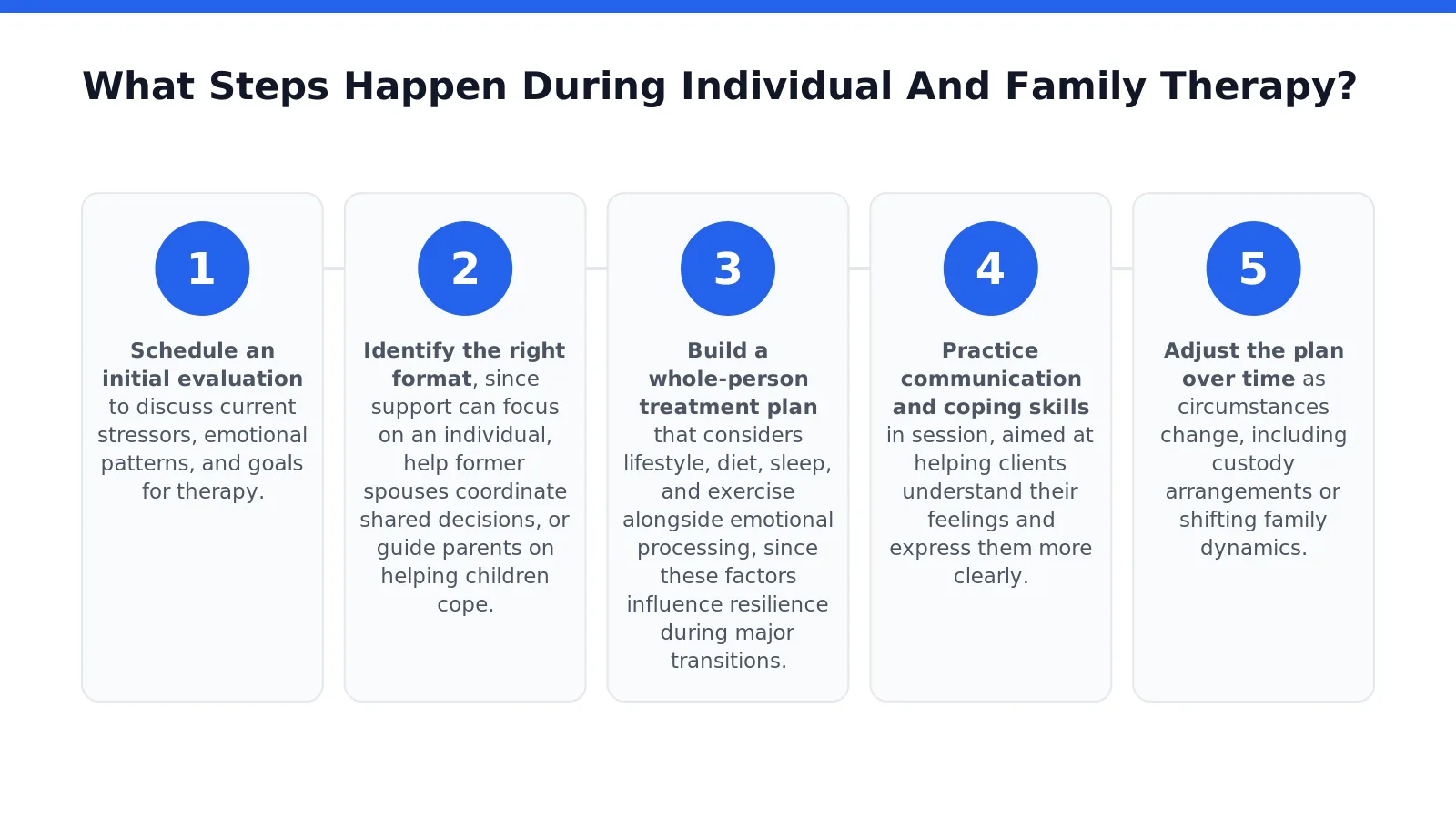
Sessions begin with an assessment of emotional needs, followed by a structured plan that addresses both mental health symptoms and practical life adjustments. Much of this work is psychotherapy for divorce grief: structured sessions that help each family member name what they’ve lost and build toward something steadier. Divorce counseling at Zoelife follows a sequence designed to meet each family member where they are, whether that person is navigating the separation alone, alongside a former spouse, or on behalf of children adjusting to a new household structure.
The process generally unfolds in this order:
- Schedule an initial evaluation to discuss current stressors, emotional patterns, and goals for therapy.
- Identify the right format, since support can focus on an individual, help former spouses coordinate shared decisions, or guide parents on helping children cope.
- Build a whole-person treatment plan that considers lifestyle, diet, sleep, and exercise alongside emotional processing, since these factors influence resilience during major transitions.
- Practice communication and coping skills in session, aimed at helping clients understand their feelings and express them more clearly.
- Adjust the plan over time as circumstances change, including custody arrangements or shifting family dynamics.
Can children and teens get support too?
Yes. Counseling is available for children, adolescents, young adults, and adults. Every generation in a family can receive age-appropriate support during the divorce process. A teenager adjusting to two households needs a different approach than a younger child, and sessions are structured accordingly.
Family members do not have to face every step alone. With consistent guidance, couples and their children often find it easier to understand their emotions, communicate with less conflict, and settle into their new routines with greater confidence.
How Does Medication Management Support Emotional Regulation?

Medication management supports emotional regulation by matching the right dose. The right number of medications, to each person’s actual symptoms. Zoelife’s prescribing practices lean on the minimal effective dose, trim the total number of medications a patient takes, and limit reliance on controlled substances. For someone moving through divorce, where sleep, mood, and focus often swing unpredictably, this restraint matters. Fewer medications mean fewer side effects competing with the emotional work happening in counseling.
Medication is treated as a steppingstone rather than a default. Clinicians use the lowest effective dose and as few medications as possible, reserving prescriptions as one tool among several rather than the first or only answer. That approach keeps focus on building coping skills alongside any pharmacological support.
Does Medication Management Consider Individual Biology?
Pharmacogenomic (DNA) testing helps guide precision psychopharmacology, informing medication choices based on how a person’s body processes specific drugs. This matters during high-stress periods like separation, when standard dosing may not fit someone’s biology. Testing results support more individualized decisions rather than trial-and-error prescribing.
Is Medication Management Covered by Insurance?
Zoelife partners with most insurance providers within its network. For parents juggling co-parenting schedules and new financial realities, this coordination can make ongoing medication management more accessible and less of an added burden during an already demanding transition.
What Common Mistakes Should You Avoid While Healing?

Healing after a separation stalls when clients overlook three recurring pitfalls. Skipping trauma-informed, culturally competent support ranks among the most common, since restoring wholeness depends on evidence-based strategies tailored to each person’s background and history. Rushing past this step often slows progress rather than speeding it along.
A second misstep involves blurring the line between divorce support and marriage counseling. These two forms of care serve different purposes. Marriage counseling works to save a relationship. counseling focused on separation accepts that the marriage has ended or is ending, and instead helps clients navigate practical decisions, process grief, and move forward with clarity.
Is It a Mistake to Go Through Divorce Without Support?
Trying to rebuild identity alone, without access to in-person or virtual specialists, limits how far progress can go. Isolation during this transition often deepens confusion rather than resolving it.
Avoid these pitfalls during the healing process:
- Delaying trauma-informed, culturally competent care instead of seeking it early
- Expecting reconciliation-focused techniques when emotional processing and practical guidance are needed instead
- Navigating identity changes solo rather than using available specialist support, in person or virtual
Recognizing these patterns early allows individuals, co-parents, and anyone adjusting to a new chapter to pursue care that fits their actual needs, not a generic template, and that kind of fit is what makes post-divorce adjustment feel manageable instead of overwhelming.
FAQ
What does divorce counseling help you accomplish?
Divorce counseling helps you process anger, grief, and fear while building practical coping tools. It guides you toward a stable, whole version of life after separation using trauma-informed, culturally competent, evidence-based care from Zoelife Psychiatric Services®.
Is divorce counseling only for people in crisis?
No, divorce counseling supports anyone navigating the emotional and practical weight of separation. Many clients seek clarity, structure, and a responsive professional who treats the whole person rather than focusing only on a diagnosis.
How do you prepare for your first divorce counseling session?
Write down current symptoms like trouble sleeping or anxious thoughts, then choose a starting point: evaluation, medication management, psychotherapy, TMS, or telepsychiatry. Decide whether in-person or virtual appointments fit your schedule best.
Conclusion

In closing, divorce reshapes every part of your life, your daily routines, your relationships, your sense of self, and that weight deserves professional support grounded in evidence and compassion. Therapy, medication management when appropriate, and trauma-informed care help you process what you’re feeling while building the skills and stability to move forward. You don’t have to navigate this transition alone. With the right guidance, you can emerge from separation with clarity, resilience, and a renewed sense of wholeness.


