
A psychiatric clinic offers professional evaluation, medication management, and therapy for mental health conditions like anxiety, depression, or ARFID. These clinics typically combine psychiatric evaluations, ongoing medication monitoring, psychotherapy, and sometimes non-medication options like Transcranial Magnetic Stimulation (TMS), all organized around a single treatment plan rather than isolated appointments. Zoelife Psychiatric Services® uniquely integrates personalized and evidence-based mental health care, providing both in-person and virtual specialist access across Illinois and Florida to help restore individuals’ wholeness. Understanding what to expect, from the first evaluation through ongoing care, can make reaching out feel far less daunting.
Key Takeaways
-
A psychiatric clinic provides professional evaluation, medication management, and therapy for mental health conditions like anxiety or ARFID.
-
Outpatient psychiatric care involves scheduled appointments where patients return home the same day, distinct from inpatient hospitalization.
-
A first appointment centers on a comprehensive psychiatric evaluation reviewing personal history, current symptoms, and treatment goals.
-
Telepsychiatry lets patients meet with licensed psychiatric specialists virtually, transforming the search from geographic to fit and availability.
What Does a Psychiatric Clinic Do?
A psychiatric clinic is a mental health practice where licensed clinicians provide comprehensive psychiatric evaluations, medication management, psychotherapy, and other evidence-based treatments. Zoelife Psychiatric Services, founded by Queen Ajiere, MSN, APRN, PMHNP-BC, delivers these core services across Illinois and Florida. The clinic’s approach treats the whole person, not just a diagnosis or a single symptom.
Mental health refers to how well the mind is functioning, including how a person thinks, reasons, and makes decisions. When those functions become disrupted, a psychiatric care clinic steps in to assess what is happening and build a treatment plan that fits the individual’s needs.
What Services Does a Psychiatric Clinic Offer?
A clinic psychiatric setting typically offers several levels of care, often more than people expect when they first search for help:
-
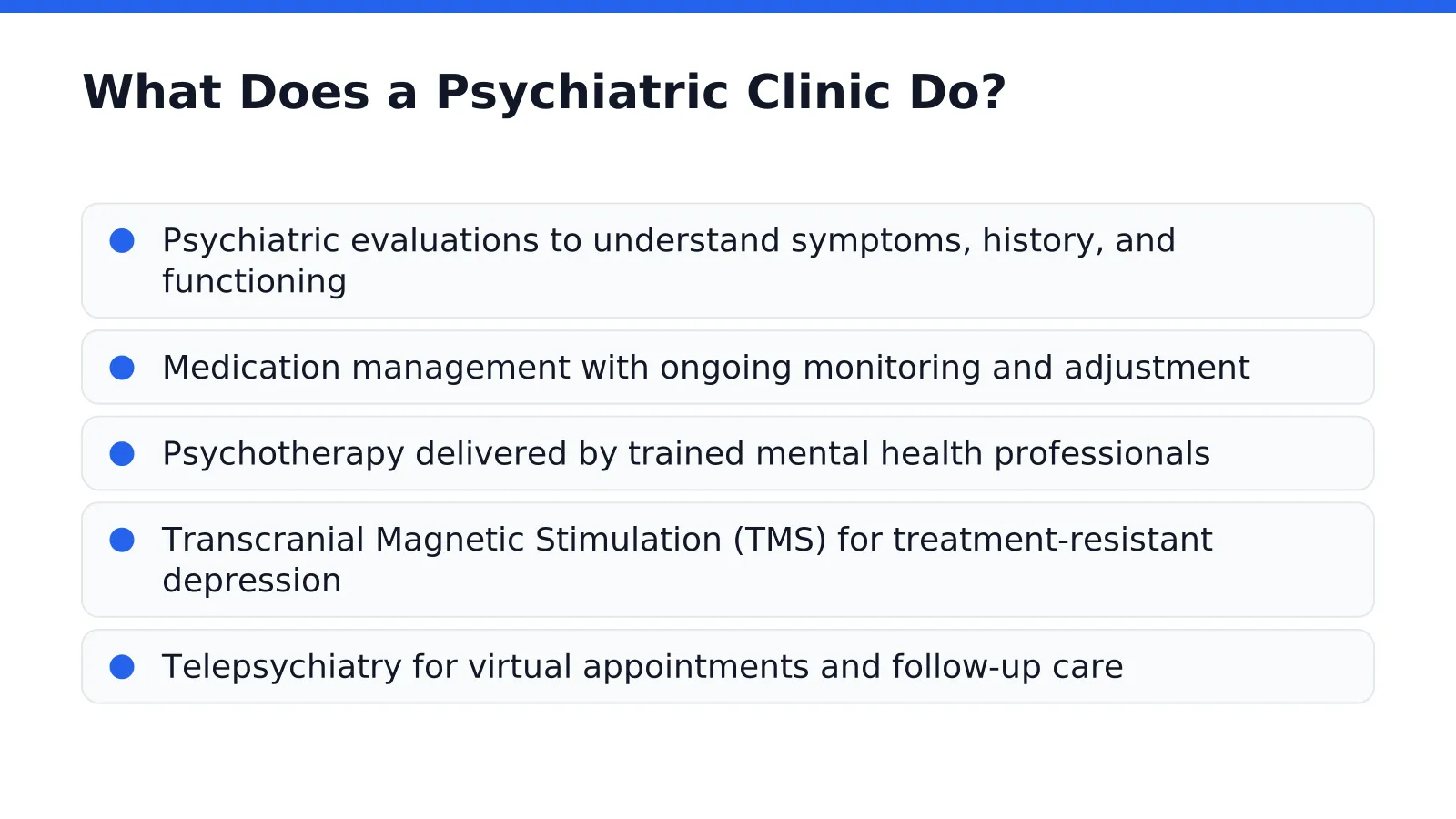
Psychiatric evaluations to understand symptoms, history, and functioning
-
Medication management with ongoing monitoring and adjustment
-
Psychotherapy delivered by trained mental health professionals
-
Transcranial Magnetic Stimulation (TMS) for treatment-resistant depression
-
Telepsychiatry for virtual appointments and follow-up care
These services are typically coordinated rather than offered in isolation. A clinician who prescribes medication often works alongside a therapist tracking the same patient’s progress, so adjustments to one part of care reflect what is happening in another. This coordinated model is part of what distinguishes a dedicated psychiatric practice from a general primary care visit where medication may be prescribed without the same depth of ongoing psychiatric support.
How Is Outpatient Care Different From a Hospital Stay?
Outpatient psychiatric care is distinct from inpatient hospitalization, which is typically reserved for mental health crises. Many people with mental health issues benefit from outpatient treatment, where they attend scheduled appointments and return home the same day. A psychiatric clinic near me search often leads to outpatient practices that offer this level of flexible, ongoing support.
Zoelife Psychiatric Services uniquely integrates personalized and evidence-based mental health care, providing both in-person and virtual specialist access to restore individuals’ wholeness.

What Happens at Your First Appointment?
A first appointment at a psychiatric clinic centers on a comprehensive psychiatric evaluation. The clinician reviews personal history, current symptoms, and treatment goals in a structured, unhurried conversation. This initial session builds the foundation for an individualized care plan rather than a rushed prescription.
The evaluation explores sleep patterns, mood changes, daily functioning, and any past mental health treatment. Family history and medical conditions also inform the clinical picture. Zoelife Psychiatric Services provides these evaluations through both in-person and virtual visits, so location does not limit access to a qualified specialist.
How Long Does a First Psychiatric Appointment Take?
Initial evaluations typically run longer than follow-up visits. The extended time allows the clinician to gather a complete history without pressure. Patients leave with a clearer understanding of their symptoms and next steps.
Will Medication Be Prescribed at the First Visit?
Medication decisions follow careful assessment, not automatic protocols. When a prescription is appropriate, clinicians favor minimal effective dosages designed for the individual. Some patients receive pharmacogenomic testing, a DNA-based tool that helps predict how a person metabolizes certain psychiatric medications. This precision reduces trial-and-error prescribing.
The approach remains trauma-informed and culturally competent throughout. Patients feel respected, heard, and understood from the first interaction. A psychiatric care clinic structured this way treats the whole person, not just a symptom list.
How Do You Find a Psychiatric Clinic Near Me?
Finding a psychiatric clinic starts with identifying what kind of support a person needs. A psychiatric care clinic provides structured, professional treatment for conditions ranging from anxiety and depression to more complex behavioral health concerns. The search narrows considerably when someone knows whether they require medication management, psychotherapy, or both, and whether ongoing monitoring like pharmacogenomic testing or TMS might be relevant to their situation.
Location shapes access, but it no longer limits it. Telepsychiatry lets patients in Illinois and Florida meet with licensed psychiatric specialists virtually. This capability transforms the search from a purely geographic one into a question of fit and availability. A clinic psychiatric model that integrates in-person and virtual access makes specialist care easier to reach for families balancing work, school, and treatment schedules. For someone searching “psychiatric clinic near me,” the more useful filter is often not distance but whether the practice offers the specific combination of services, evaluation, medication management, therapy, and flexible scheduling, that matches their needs.
What Questions Should Someone Ask Before Choosing a Clinic?
Every clinic operates differently, so it helps to ask what services, therapies, and scheduling options are available. A prospective patient should inquire about the types of therapy offered, whether the clinic provides both in-person and telehealth visits, and how soon an initial evaluation can be scheduled. Clarifying these details early prevents mismatched expectations and delays in care.
Can Telehealth Replace In-Person Psychiatric Visits?
Telehealth handles many core services effectively. Patients can discuss medication options such as SSRIs with licensed professionals through telehealth. For initial evaluations and ongoing medication management, virtual visits often match the quality of in-person appointments. Some situations, like certain diagnostic assessments, still benefit from face-to-face interaction. A clinic offering both formats gives patients flexibility without sacrificing thoroughness.
For those in Illinois, a mental health provider in Chicago can serve as a starting point for understanding what comprehensive outpatient care looks like. The right clinic combines clinical expertise with genuine respect for the person seeking help.
What Treatments Are Offered at a Clinic?
A psychiatric clinic provides a range of structured treatments designed to address mental health conditions. These services move beyond occasional counseling to deliver consistent, evidence-based care. Treatment plans are built around each person’s specific diagnosis and personal goals.
Psychotherapy forms a core part of care at a psychiatric care clinic. This talk therapy is available for children, adolescents, young adults, and adults. Sessions help individuals process emotions, change unhelpful thought patterns, and develop coping skills. A clinic psychiatric team often includes therapists trained in multiple modalities to match the right approach to the right person.
What non-medication treatments are available?
Some clinics offer Transcranial Magnetic Stimulation (TMS) therapy. TMS is a non-medication option for certain mental health conditions. It uses magnetic pulses to stimulate nerve cells in brain regions linked to mood regulation. This treatment provides an alternative path for individuals who have not found relief through other methods.
How are conditions like anxiety and depression treated?
Conditions such as anxiety, depression, and PTSD respond to evidence-based treatment approaches. A clinic addresses these diagnoses with a combination of psychotherapy and, when appropriate, medication management. Care plans remain individualized at every stage. Medication is never presented as the only solution. The goal is always to restore a person’s sense of wholeness through personalized, integrated support. Exploring different types of mental health therapy helps patients understand the full range of tools available for their recovery journey.
When Should You Consider a Psychiatric Care Clinic?
A psychiatric care clinic becomes worth considering when worry, tension, or fear stops being occasional and starts disrupting daily life. Persistent anxiety of that kind is more than pre-event nerves, and it deserves a professional conversation rather than another year of coping alone.
The threshold is not a diagnosis. It is a pattern that interferes with work, sleep, relationships, or basic routines. Someone does not need to reach a crisis point before seeking help; in fact, earlier conversations with a psychiatric provider often lead to simpler, less intensive treatment plans than waiting does.
What Signs Suggest a Higher Level of Care?
Some symptoms call for faster, more intensive support. GoodRx notes that suicidal thoughts, self-harm urges, or an inability to meet basic needs on one’s own are signs a person may benefit from a hospital stay. A voluntary hospital stay helps a person recover from a crisis and build a plan for ongoing treatment. Families who notice these signs should act promptly rather than wait.
Where Does an Outpatient Clinic Fit?
A clinic psychiatric setting offers a lower-pressure starting point for people who want to understand their symptoms first. Zoelife Psychiatric Services® takes a responsive, trauma-informed, and culturally competent approach to care. That commitment to restoring wholeness through evidence-based strategies means a first visit focuses on listening and understanding, not rushing to a label. Anyone weighing whether to reach out can start by learning how mental health awareness supports early help.
FAQ
What services does a psychiatric clinic offer?
Psychiatric clinics provide comprehensive evaluations, medication management, psychotherapy, Transcranial Magnetic Stimulation (TMS), and telepsychiatry for virtual care.
What happens at your first appointment?
A first appointment centers on a comprehensive psychiatric evaluation reviewing personal history, current symptoms, and treatment goals in a structured, unhurried conversation.
How is outpatient care different from a hospital stay?
Outpatient psychiatric care involves scheduled appointments where patients return home the same day, distinct from inpatient hospitalization reserved for mental health crises.
What conditions does a psychiatric clinic treat?
A psychiatric clinic typically treats anxiety, depression, PTSD, ADHD, OCD, and other mood or behavioral health conditions, using a combination of psychotherapy, medication management, and, when appropriate, non-medication options like TMS.
Does telepsychiatry work as well as an in-person psychiatric visit?
For most initial evaluations and ongoing medication management, telepsychiatry can match the quality of an in-person visit. Zoelife Psychiatric Services offers both formats across Illinois and Florida, so patients can choose what fits their schedule and comfort level.
A psychiatric clinic exists to help people understand their symptoms and find a path forward, whether through therapy, medication, or a combination of both. Knowing what to expect removes much of the uncertainty that keeps people from reaching out. The first visit is a conversation, not a verdict. For anyone whose daily life feels disrupted by persistent worry, low mood, or overwhelming stress, the next step is simply making that first appointment and letting a professional help sort through what comes next.